
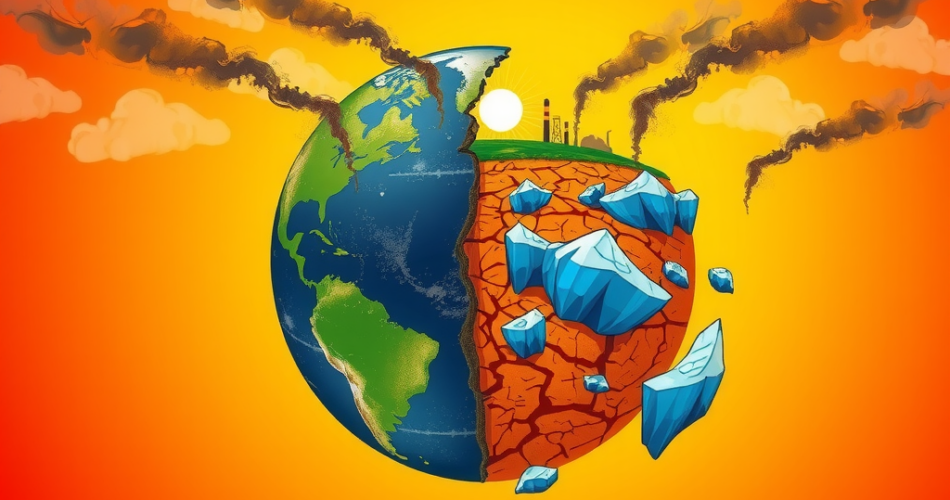
Climate change and global warming are two of the biggest challenges facing our planet today, affecting weather patterns, sea levels, and millions of lives. This article will help students understand what climate change and global warming are, why they matter, their causes, impacts, and potential solutions.
Key Takeaways
- Understand the difference between climate change and global warming
- Learn about the main causes such as greenhouse gas emissions
- Explore impacts on Earth’s environment and human society
- Find useful tips on writing a strong paragraph for exams
Climate Change and Global Warming Paragraph in 150 Words
Climate change means long-term changes in the Earth’s climate, while global warming is the rise in the average temperature of the earth due to increased greenhouse gases like carbon dioxide. Human activities such as burning fossil fuels, deforestation, and pollution contribute to global warming by increasing greenhouse gas emissions. These changes cause many problems, including melting glaciers, rising sea levels, floods, droughts, unpredictable weather, and loss of biodiversity. The impacts affect agriculture, water supply, health, and wildlife. To fight global warming, people should use renewable energy, reduce pollution, plant more trees, and waste less energy. Governments and individuals must work together to protect the environment and create a sustainable future. Students should be aware of this topic because it relates to their future and inspires responsible habits. Learning about global warming helps us realize the importance of saving nature for the well-being of our planet and all living creatures.
Climate Change and Global Warming Paragraph in 250 Words
Climate change refers to long-term shifts in temperature and weather patterns, largely caused by human actions like burning fossil fuels and deforestation, which increase greenhouse gases. Global warming is a specific feature of climate change that results in the Earth’s average temperature steadily rising. The major greenhouse gases—carbon dioxide, methane, and nitrous oxide—trap heat in the atmosphere, leading to melting glaciers, rising sea levels, frequent floods, droughts, and extreme weather. Such environmental shifts threaten agriculture, drinking water, public health, and countless animal species. Cities by the sea face the risk of going underwater, and many plants and animals lose their habitats. To reduce the effects, governments are encouraging renewable energy alternatives, waste reduction, afforestation, and eco-friendly practices. International agreements like the Paris Accord aim to limit temperature rise. Students have an important role too—they can recycle, plant trees, conserve water, and raise awareness. Learning about climate change helps students become responsible citizens who protect nature and promote sustainability. By understanding the causes and consequences, everyone can contribute towards a greener, safer planet and ensure a better future for generations.
Climate Change and Global Warming Paragraph in 300 Words
Climate change describes the long-term transformation of global or regional climate patterns, often caused by human-induced activities like excessive use of fossil fuels, deforestation, and industrial emissions. Global warming, a key aspect of climate change, indicates the continuous increase in the Earth’s average surface temperature due to the accumulation of greenhouse gases such as carbon dioxide, methane, and nitrous oxide. These gases form a ‘blanket’ in the atmosphere, trapping heat and disrupting the natural temperature balance. The consequences include melting polar ice caps, rising sea levels that threaten coastal cities, unpredictable weather patterns, severe droughts, deadly heat waves, and increased frequency of natural disasters like cyclones and floods. Biodiversity is at risk, with many animal and plant species facing extinction due to habitat loss. Human health suffers due to heat stress, disease spread, and food shortages. To combat these serious threats, countries worldwide promote renewable energy sources like solar and wind, reduce carbon emissions, implement afforestation programs, and spread environmental awareness. Agreements like the Paris Climate Accord urge nations to keep temperature rise below dangerous levels. Students need to learn about these issues because the future depends on today’s actions. They can help by saving electricity, planting trees, recycling, and persuading family and friends to act environment-friendly. Developing good habits now ensures a healthier planet later. Climate change and global warming are not problems of tomorrow—they are urgent issues requiring everyone’s participation today. By understanding their causes, effects, and solutions, students will be empowered to protect natural resources, support sustainability, and ensure safer living conditions for all life forms on Earth.
Climate Change and Global Warming Paragraph in 400 Words
Climate change and global warming are critical environmental problems posing challenges to our planet’s stability, economy, and health. Climate change involves significant, lasting changes in weather conditions and global climate patterns, while global warming specifically refers to the continuous rise of Earth’s average temperature largely because of elevated greenhouse gas emissions. Gases like carbon dioxide, methane, and nitrous oxide—produced mainly through burning fossil fuels, industrial activities, deforestation, and excessive agricultural practices—trap solar radiation in the atmosphere. This results in the ‘greenhouse effect,’ which leads to rapid earth warming beyond natural variability. The consequences are alarming: glaciers and ice sheets are melting at unprecedented rates, causing sea levels to rise and threatening low-lying coastal regions with submersion. Weather patterns become more erratic, with severe storms, cyclones, heat waves, droughts, and floods increasing in frequency and intensity. Such changes affect food production, water supplies, biodiversity, and human health. Many species face extinction, disrupting natural ecosystems and the balance necessary for life. Regions dependent on stable climates for agriculture or fishing suffer economic losses, increasing poverty and inequality. International organizations stress the importance of reducing carbon footprints, promoting renewable energy sources like solar, wind, and hydro energy, and enhancing carbon capture through afforestation and technology. Policies under global agreements such as the Paris Accord set targets to limit global temperature rise. As future leaders, students play a vital role—practicing simple eco-friendly habits, influencing their families and communities, and raising awareness. Schools must incorporate climate education to sensitize young minds. Critical thinking about energy use, reducing plastic waste, public transport, cycling, recycling, and local activism can make a significant difference. Climate change and global warming are urgent global issues demanding local solutions and global cooperation. Understanding their science, causes, effects, and the importance of sustainability will empower generations to take informed action and safeguard the Earth’s environment, making the planet a safe place for humans, plants, and animals alike.
Climate Change and Global Warming Paragraph for Class 6-7
Climate change means a long-term change in Earth’s weather. Global warming is when the Earth becomes hotter because of pollution and greenhouse gases like carbon dioxide. These gases come from factories, cars, and people cutting down trees. The earth is getting warmer, which causes ice in the poles to melt, sea levels to rise, and many animals to lose their homes. Sometimes, there are more floods, storms, or droughts because of this. We can help by planting trees, saving electricity, and not wasting water. Everyone must protect our Earth, as it is our only home. Learning about climate change helps us understand why it is important to save our environment.
Climate Change and Global Warming Paragraph for Class 8
Climate change is the long-term change in Earth’s weather patterns caused by human activities like burning fossil fuels and cutting trees. Global warming is an important part of climate change, leading to an increase in the Earth’s temperature because of greenhouse gases such as carbon dioxide and methane. These gases block heat from leaving the planet, resulting in melting ice caps, rising sea levels, floods, droughts, and heatwaves. Many animals lose their homes, and farmers face problems growing food. To reduce global warming, we should plant more trees, save energy, and reduce pollution. Governments are making rules to protect nature. As students, we must learn about these topics to protect our future and share the knowledge with others.
Climate Change and Global Warming Paragraph for Class 9
Climate change refers to the long-term changes in the Earth’s climate caused primarily by human-induced pollution and deforestation. Global warming is the phenomenon where Earth’s average temperature rises due to increased greenhouse gases such as carbon dioxide, methane, and nitrous oxide. These gases intensify the greenhouse effect, trapping more heat in the atmosphere. As a result, we face melting glaciers, rising ocean levels, extreme weather events, and loss of biodiversity. Agriculture and water resources are severely affected, threatening food security and human health. Combating this requires international cooperation, adoption of renewable energy, afforestation, and environmental awareness. Students must become environmentally responsible by saving energy, reducing waste, and actively participating in climate action for sustainable development.
Climate Change and Global Warming Paragraph for SSC
Climate change indicates a persistent change in the climatic conditions, driven mainly by excessive greenhouse gas emissions from burning fossil fuels, industrialization, and deforestation. Global warming, a symptom of climate change, refers to the consistent rise in Earth’s average temperatures caused by an increased concentration of carbon dioxide, methane, and nitrous oxide trapping heat in the atmosphere. This leads to alarming effects like glacier retreat, sea level rise, severe droughts, cyclones, unpredictable weather, and massive biodiversity loss. Such environmental changes threaten agriculture, health, water supply, and economic development. International efforts, such as the Paris Agreement, aim to mitigate these effects by promoting renewable energy, enforcing environmental laws, and encouraging conservation. Students, as future guardians of the planet, must cultivate environmental awareness, use resources wisely, and inspire others to adopt sustainable habits to ensure a healthier planet.
Climate Change and Global Warming Paragraph for HSC
Climate change signifies a long-term alteration of climate patterns, primarily attributed to anthropogenic factors such as fossil fuel combustion, industrial emissions, and large-scale deforestation. Global warming, an outcome of these activities, refers to the steady rise in average global temperatures resulting from excessive greenhouse gases accumulating in the atmosphere and enhancing the natural greenhouse effect. The repercussions are extensive and severe—accelerated ice melt in polar regions, sea-level rise endangering coastal populations, increased heatwaves, cyclones, droughts, and disruptions to ecological balance resulting in biodiversity loss. Additionally, global warming exacerbates socio-economic challenges by affecting agriculture, fisheries, water resources, and public health. International frameworks like the Kyoto Protocol and Paris Agreement aim to combat these issues through emission reductions and sustainable development policies. Students must develop critical understanding, engage in environmental activism, and adopt sustainable lifestyles. Grasping the complexity of climate change enables young learners to contribute towards mitigating climate change and building a resilient future.
Climate Change and Global Warming Bangla Meaning
জলবায়ু পরিবর্তন মানে পৃথিবীর আবহাওয়ার দীর্ঘমেয়াদী পরিবর্তন, আর গ্লোবাল ওয়ার্মিং হচ্ছে পৃথিবীর গড় তাপমাত্রা বেড়ে যাওয়া। মানুষের আগ্রাসী কার্যকলাপ যেমন বন উজাড়, জীবাশ্ম জ্বালানি পোড়ানো এবং শিল্প দূষণে গ্রিনহাউস গ্যাস বেড়ে যায়। এই গ্যাসগুলো পৃথিবীর উষ্ণতা বৃদ্ধি করে, ফলে বরফ গলে পানি বাড়ে, সমুদ্রপৃষ্ঠ বেড়ে যায়, বন্যা, খরা ও অতিবৃষ্টি দেখা দেয়। কৃষি, স্বাস্থ্য, ও পরিবেশ বিপর্যস্ত হয়। সমাধানের জন্য নবায়নযোগ্য শক্তি ব্যবহার, বেশি গাছ লাগানো, দূষণ কমানো এবং জনগণকে সচেতন করতে হবে। ছাত্রছাত্রীদের এ ব্যাপারে জানা দরকার, কারণ তাদের ভবিষ্যৎ এই পৃথিবীর ওপর নির্ভরশীল। সবাই মিলে কাজ করলে পৃথিবীকে জলবায়ু পরিবর্তন ও গ্লোবাল ওয়ার্মিং থেকে রক্ষা করা সম্ভব।
| English Word | Bengali Meaning |
|---|---|
| Climate | জলবায়ু |
| Change | পরিবর্তন |
| Global | বিশ্ব |
| Warming | উষ্ণতা বৃদ্ধি |
| Greenhouse gases | গ্রিনহাউস গ্যাস |
| Pollution | দূষণ |
| Deforestation | বন উজাড় |
| Emission | নির্গমন |
| Renewable energy | নবায়নযোগ্য শক্তি |
| Biodiversity | জীববৈচিত্র্য |
Paragraph Writing Rules
To write the best paragraph in exams, follow a clear structure: start with a topic sentence explaining the main idea. Add 3–4 supporting sentences that include facts, examples, or details relevant to the topic. End with a concluding sentence summarizing the paragraph or giving your opinion. Use simple sentences and correct grammar, and avoid irrelevant details. Connect ideas smoothly with linking words like ‘because,’ ‘however,’ or ‘therefore.’ Before writing, plan the points you will discuss. Use correct spelling, punctuation, and varied vocabulary. Practicing writing regularly on important topics like climate change will improve your skills, make your paragraphs more engaging, and help you score higher marks. Always read the question carefully and tailor your paragraph length and content to the required word count.
Quick Facts Table
| Topic | Key Points |
|---|---|
| Climate change | Long-term shifts in climate caused by human activity |
| Global warming | Rise in average world temperature due to greenhouse gases |
| Greenhouse gases | Carbon dioxide, methane, nitrous oxide |
| Major impacts | Melting ice, rising seas, extreme weather, biodiversity loss |
| Solutions | Renewable energy, afforestation, international agreements |
FAQ
-
Q: What causes global warming?
A: Mainly greenhouse gas emissions from burning fossil fuels and deforestation. -
Q: How does climate change affect humans?
A: It leads to extreme weather, health issues, food shortages, and economic loss. -
Q: What is the difference between climate change and global warming?
A: Climate change is long-term climate shifts; global warming is Earth’s rising temperature. -
Q: How can students fight climate change?
A: By saving energy, planting trees, reducing waste, and spreading awareness. -
Q: Why is it important to learn about climate change?
A: It helps protect the environment and builds responsibility for the future.
Conclusion
Climate change and global warming threaten all life by disrupting nature and human society. Understanding their causes and impacts helps us act responsibly to protect our environment. Students should stay informed and take small steps that collectively make a big difference. Working together, we can reduce pollution, conserve resources, and secure a safer world. Share your thoughts and ideas in the comments about how we can protect our planet for a better future.

Comments